Rights of Nature
Giving Effect to Article 192 UNCLOS: The Emerging Role of Ocean Rights

By Michelle Bender, Dr. Anna von Rebay & Larissa Leal-Paez
The United Nations Convention on the Law of the Sea (UNCLOS) contains one of the most important, and potentially far-reaching, environmental obligations in international law. Art. 192 UNCLOS provides that States have the obligation to protect and preserve the marine environment. This is not merely a policy objective. It is a binding legal obligation that applies across jurisdictional zones and to the full range of human activity and the threats they pose to the Ocean.
Yet, Art. 192 UNCLOS does not exhaustively define what protection and preservation require. Rather, its content is given greater specificity by other provisions of UNCLOS and may also be informed by other relevant rules of international law, decisions and resolutions of international bodies, and the best available scientific knowledge.
At the same time, Rights of Nature (or, in the context of the Ocean — Ocean Rights) legal frameworks have emerged to address escalating ecological degradation and emerging socio-environmental challenges. For example, noting how legal change “frequently lag behind societal changes,” the Uttarakhand High Court determined that “new inventions are required to be made [...] to protect the environment and ecology,”[1] using this reasoning to support the recognition of the legal personality of Nature.
In fact, courts are increasingly deriving Rights of Nature from existing doctrines and obligations in jurisdictions where it is not codified. Courts in India, Bangladesh, Pakistan, Colombia, Argentina, Brazil and the Inter-American Court of Human Rights are among them, covering civil law and common law systems. In these instances, courts are asserting that RoN is an applicable legal norm that can effectively implement and enforce existing human rights and environmental obligations.

The emerging jurisprudence therefore raises three significant possibilities for the Law of the Sea:
a) the duty to protect and preserve the marine environment may itself provide part of the juridical foundation for recognising the Ocean as a subject of rights (i.e., as a beneficiary of that protection);
b) Rights of Nature is already an applicable framework that can be invoked to inform the interpretation of the obligation to protect and preserve the marine environment; and
c) Ocean Rights can give legal effect to the obligation to protect and preserve the marine environment (ensuring it is effectively implemented and enforced).
From duties to rights
Rights and duties are relational concepts. In their classic legal form, a claim-right held by one subject corresponds with a duty borne by another. Our research into Rights of Nature jurisprudence reflects this relationship: as the Supreme Court of India has explained, legal rights can be understood as interests which the law protects by imposing corresponding duties upon others.
The Supreme Court applied this logic by treating constitutional duties to protect the natural environment, together with statutory duties to ensure animal welfare, as corresponding to rights held by animals themselves, including the right to inherent dignity and to the protection of their well-being.[2] The Court reasoned that, because duties to protect animals exist, this implied that rights were already held by animals, and can be enforced where violated.[3]
Colombian jurisprudence has developed a comparable logic in relation to ecosystems. In the Atrato River case, constitutional duties to conserve, restore and sustainably manage natural resources helped ground recognition of the River as a subject of rights.[4]
This logic is important and inspires a further question: could the obligation to protect and preserve the marine environment imply that the marine environment itself already holds a corresponding right to protection and preservation?
As legal theorists have long recognised [5], not every duty necessarily produces a corresponding right. A critical distinction is whether a duty is merely about something or is actually owed to it. Environmental duties could conceivably exist exclusively for the benefit of humans while requiring governments to regulate environmental conditions. This distinction matters: Art. 192 UNCLOS requires States to protect and preserve the marine environment. The object of the duty is therefore ecological rather than purely human. ITLOS repeated the long-standing understanding of this obligation which is that “[t]his ‘general obligation’ extends both to ‘protection’ of the marine environment from future damage and ‘preservation’ in the sense of maintaining or improving its present condition. Article 192 therefore entails the positive obligation to take active measures to protect and preserve the marine environment, and by logical implication, entails the negative obligation not to degrade it.” [6] In other words, compliance is measured, at least partly, by the ecological condition of the Ocean. The duty begins to resemble one owed, at least in part, to the ecological system itself. Thus, it is reasonable to argue that rights of the Ocean, at least to protection and preservation, already exist within UNCLOS.
Ocean Rights is an applicable legal norm in the context of UNCLOS
Rather than requiring the creation of an entirely separate body of international law, Rights of Nature can operate as a legal norm informing the interpretation of obligations States have already accepted.
In its 2017 Advisory Opinion on the Environment and Human Rights, the Inter-American Court of Human Rights (IACtHR) held that the autonomous right to a healthy environment protects components of the environment—including “forests, rivers, and seas”— as legal interests in themselves, even where there is no certainty or evidence of risk to individual humans.[7] The point is significant: first, Rights of Nature is an inherent, or substantive, element of the Human Right to a Clean, Healthy, and Sustainable Environment; and secondly, the recognition of Nature as a legal interest in itself is justified not merely because ecosystems provide services to humanity, but because other living organisms and ecological systems merit protection independently.
The Court went further in its 2025 Advisory Opinion on the Climate Emergency and Human Rights. It recognised Rights of Nature as a contemporary normative expression of the principle of interdependence between humanity and the environment, acknowledging that fundamental human rights depend on a healthy environment.[8] Further, the IACtHR found that RoN was compatible with State’s obligations of progressivity (and evolutive interpretation), and international legal principles of precaution, prevention, intergenerational equity and sustainable development,[9] all of which are relevant in interpretation of the UNCLOS.

UNCLOS itself belongs to an evolving legal system. Evolutive interpretation recognises that international legal instruments may need to be interpreted in light of present-day conditions, subsequent developments in international law and contemporary scientific knowledge.[10] This does not allow judges to rewrite treaties. It allows broadly framed treaty obligations to continue achieving the purposes for which States created them as the world around them changes.
That proposition has particular force within UNCLOS. Its Preamble recognises that “the problems of ocean space are closely interrelated and need to be considered as a whole” and expressly describes the Convention as achieving both the codification and progressive development of the Law of the Sea. It further recognises that matters not regulated by the Convention continue to be governed by the rules and principles of general international law. That open-textured character extends to the obligation to protect and preserve the marine environment. The International Tribunal for the Law of the Sea (ITLOS), in its 2024 Climate Change Advisory Opinion, confirmed that Art. 192 UNCLOS has a “broad scope” encompassing any type of harm or threat to the marine environment.[11] The Tribunal expressly noted that in its view, coordination and harmonization between the Convention and external rules are important to clarify, and to inform the meaning of, the provisions of the Convention, particularly Part XII UNCLOS on the obligation to protect and preserve the marine environment, and to ensure that the Convention serves as a living instrument.[12] Accordingly, although UNCLOS refers neither to climate change, nor to climate alone, the Tribunal concluded that its broad wording encompasses contemporary climate-related threats to the Ocean. The obligation thus evolves with threats and ecological conditions. Even more, for the obligation to protect and preserve the marine environment ITLOS observed that State Parties are required to take measures “as far-reaching and efficacious as possible”.[13]
Thus, the reasoning behind international case law reveals that we do not need an explicit law recognising the rights of the Ocean in order to apply rights-based protections and measures in the context of UNCLOS. Rather, contemporary threats to the Ocean, including biodiversity loss, developing societal needs, and corresponding norms, such as the Human Right to a Healthy Environment, suggest that Ocean Rights is implicit in the UNCLOS obligation, and thus its implementation and enforcement.
Ocean Rights can give legal effect to Art. 192 UNCLOS
Finally, a third lesson from comparative case law is that Ocean Rights can give legal effect to the obligation to protect and preserve the marine environment, in that courts have also treated the recognition of natural entities as subjects of rights as an institutional mechanism through which the States’ existing duties can be more effectively discharged.
For example, in India, the High Court of Uttarakhand in Narayan Dutt Bhatt v. Union of India (2018), held that “in order to protect and promote greater welfare of animals including avian and aquatic, animals are required to be conferred with the status of legal entity / legal person.”[14] Here, personhood is justified by the protective end it serves rather than as the necessary correlate of a pre-existing right. Additionally, the Punjab and Haryana High Court found that the acts (and inactions) of the States of Punjab and Haryana caused permanent damage to the catchment area of Sukhna Lake [15] in violation of their prime duty to protect the ecology and environment around Sukhna Lake to save it from extinction. [16] Declaring the lake as a legal person was justified to “help the society in achieving the desired result,”[17] which was the restoration and preservation of Sukhna Lake. The Court highlighted how extending legal status to environmental entities allows issues of ecological equilibrium to be litigated in the name of the inanimate entity itself, thereby facilitating their survival and preservation.[18] Thus, Rights of Nature was found to ensure the effective realisation of States’ duties to protect, preserve and restore the natural environment.
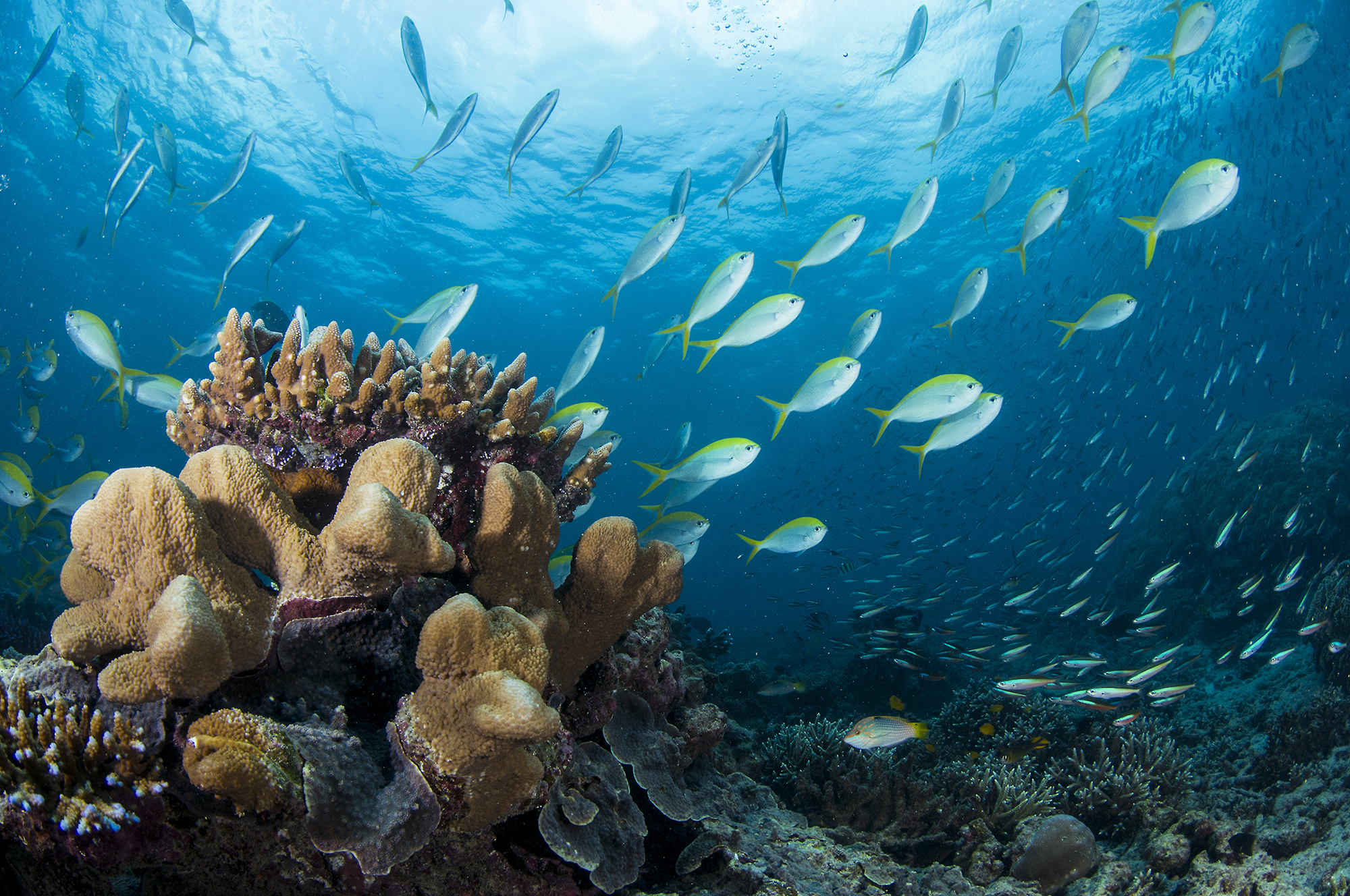
UNCLOS has often been described as a “Constitution for the Oceans.”[19] Yet much of the legal architecture of the law of the sea remains structured around States’ jurisdiction, sovereign rights and humanity’s use of Ocean space.[20] As a result, despite its existence, Ocean health has declined significantly. Major pollution events such as the Torrey Canyon disaster in 1967 helped expose the scale of human impacts on the marine environment and contributed to the development of increasingly extensive international regulation. Today, a dense body of international environmental law governs activities affecting the marine environment.[21] Nevertheless, the continued deterioration of Ocean health shows that the existence of extensive regulation alone has not been sufficient to ensure effective protection and preservation. Ocean Rights offers a different legal perspective: rather than treating the marine environment solely as an object of regulation, resource use or State responsibility, it recognises the Ocean itself as a legally protected interest whose integrity, functioning and regeneration must be taken into account.
The IACtHR determined that the Rights of Nature protects the long-term integrity, stability, equilibrium and functionality of ecosystems and their fundamental processes.[22] Ecuador’s Constitutional Court has given practical effect to that understanding in the marine context, holding that human activities must be regulated so as to avoid disproportionate impacts on coastal marine ecosystems and to respect their cycles, functions, structures and evolutionary processes, as well as their conservation and restoration.[23] These decisions illustrate how Rights of Nature can translate the protection of ecological integrity into concrete constraints on human activity. In this way, Ocean Rights could provide a legal framework for preventive and protective action where human activities threaten the functioning, resilience or regeneration of marine ecosystems.
Applied to Art. 192 UNCLOS, the central proposition is that Ocean Rights could help give concrete legal content and practical effect to the obligation to protect and preserve the marine environment. If the Ocean is recognised not merely as the object of State regulation, but as a legally protected interest with its own ecological integrity, functioning and capacity for regeneration, Art. 192 UNCLOS is no longer concerned only with what States may do in the Ocean. It also requires decision-makers to ask what the Ocean itself must be protected against, what ecological conditions must be maintained, and when human activities must be restricted in order to secure those conditions. The Ocean, its ecosystems and species populations, would become the beneficiary of protection, leading to stronger regulatory standards for ‘what is healthy,’ and thus what constitutes ‘significant harm.’ In this way, Ocean Rights can help reshape Ocean governance around accountability and precaution for activities that cause serious or irreversible harm. Ocean Rights could thus operate as an interpretive and institutional mechanism through which the obligations contained in Art. 192 UNCLOS are more effectively implemented and enforced.
Conclusion
The jurisprudence OVL has examined suggests that applying Rights of Nature does not necessarily depend on an express legislative act. Courts in several jurisdictions have recognised rights of natural entities by interpreting existing human rights and environmental duties, constitutional protections and legal principles as already protecting interests held by nature itself. Especially in the Law of the Sea, the absence of an international treaty expressly recognising the Ocean as a rights-bearing entity does not necessarily end the inquiry. Rather, Art. 192 UNCLOS may itself provide part of the juridical foundation for recognising the marine environment as the holder or beneficiary of legally protected interests, while Rights of Nature principles and standards can in turn help give more concrete content and practical effect to the duty to protect and preserve it. Further, existing international law may already contain the foundations from which Ocean Rights can be recognised and developed. If Art. 192 UNCLOS is interpreted in this way, the marine environment would no longer be protected solely as an object of State regulation or because of its utility to humans, but also as a legally protected interest in its own continued existence, integrity, functioning and regeneration. Ocean Rights could thereby become a means of making one of UNCLOS’s most important environmental obligations more concrete, effective and enforceable.
--
References
[1] Narayan Dutt Bhatt v. Union of India, Writ Petition (PIL) No. 43 of 2014, ¶ 84 (Uttarakhand H.C. July 4, 2018).
[2] Animal Welfare Board of India v. A. Nagaraja (2014) SCC 547.
[3] Ibid.
[4] Constitutional Court of Colombia, Sentencia T-622/16 (Atrato River), 10 November 2016.
[5] Wenar, Leif, The Nature of Claim-Rights, 123 Ethics 202 (2013), https://www.journals.uchicago.edu/doi/10.1086/668707
[6] PCA South China Sea Arbitration (Merits), para. 941; Climate Change Advisory Opinion, Advisory Opinion of May 21, 2024, ITLOS Case No. 31, ¶ 42, para. 386 f.
[7] State Obligations in Relation to the Environment in the Context of the Protection and Guarantee of the Rights to Life and Personal Integrity, Advisory Opinion OC-23/17, Inter-Am. Ct. H.R. (ser. A) No. 23, ¶ 42 (Nov. 15, 2017), para. 62.
[8] Climate Emergency and Human Rights, Advisory Opinion OC-32/25, Inter-Am. Ct. H.R. (ser. A) No. 32, ¶ 42 (May. 29, 2025), para.282
[9] Ibid.
[10] Legal Consequences for States of the Continued Presence of South Africa in Namibia (South West Africa) notwithstanding Security Council Resolution 276 (1970), Advisory Opinion, 1971 I.C.J. Rep. 16.
[11] Climate Change Advisory Opinion, supra note, paras. 385 and 441(4)(b).
[12] Climate Change Advisory Opinion, supra note, para. 130
[13] Climate Change Advisory Opinion, supra note, para. 399; Obligations of States in respect of Climate Change, Advisory Opinion, ICJ, para. 343 (July 23)
[14] Narayan Dutt Bhatt v. Union of India, supra note.
[15] Court on Its Own Motion v. Chandigarh Administration, C.W.P. No. 18253 of 2009, at 141 (P&H High Ct. 2020).
[16] Court on Its Own Motion v. Chandigarh Administration, C.W.P. No. 18253 of 2009, at 83 (P&H High Ct. 2020).
[17] Court on Its Own Motion v. Chandigarh Administration, C.W.P. No. 18253 of 2009, at 124 (P&H High Ct. 2020).
[18] Punjab and Haryana High Court, Court on Its Own Motion v. Chandigarh Administration, C.W.P. No. 18253 of 2009, 2020, at 129.
[19] Kohn, Tommy, A Constitution for the Oceans', remarks by Tommy T.B. Koh, of Singapore President of the Third United Nations Conference on the Law of the Sea: https://www.un.org/depts/los/convention_agreements/texts/koh_english.pdf.
[20] Tanaka, Yoshifumi, The International Law of the Sea, (3d ed), p. 4.
[21] von Rebay, Anna, The designation of Marine Protected Areas: a legal obligation, p. 15; Tanaka, Yoshifumi, he International Law of the Sea, (3d ed), p. 32; Matz, Nele, Wege zur Koordinierung völkerrechtlicher Verträge – Völkervertragsrechtliche und institutionelle Ansätze, in: Max-Planck-Institut für ausländisches öffentliches Recht und Völkerrecht-Beiträge zum ausländischen öffentlichen Recht und Völkerrecht, Vol 175, p. 53 f.
[22] Climate Emergency and Human Rights, Advisory Opinion OC-32/25, Inter-Am. Ct. H.R. (ser. A) No. 32, ¶ 42 (May. 29, 2025), p. 97 para 279; p. 109, para 315.
[23] Insights from Ecuador’s Constitutional Court on the Practical Applications of Rights of Nature in Ocean Governance. Ocean Vision Legal Blog. https://www.oceanvisionlegal.com/blog/ocean-rights-in-action
Related Blog posts


Support Our Work
The Ocean needs more than awareness. It needs accountability. Your support helps advance strategic legal action, achieve strengthen Ocean Rights and support Ocean-dependent and Indigenous communities working to protect the ecosystems they know best. Together, we can help turn legal obligation into lasting Ocean protection.