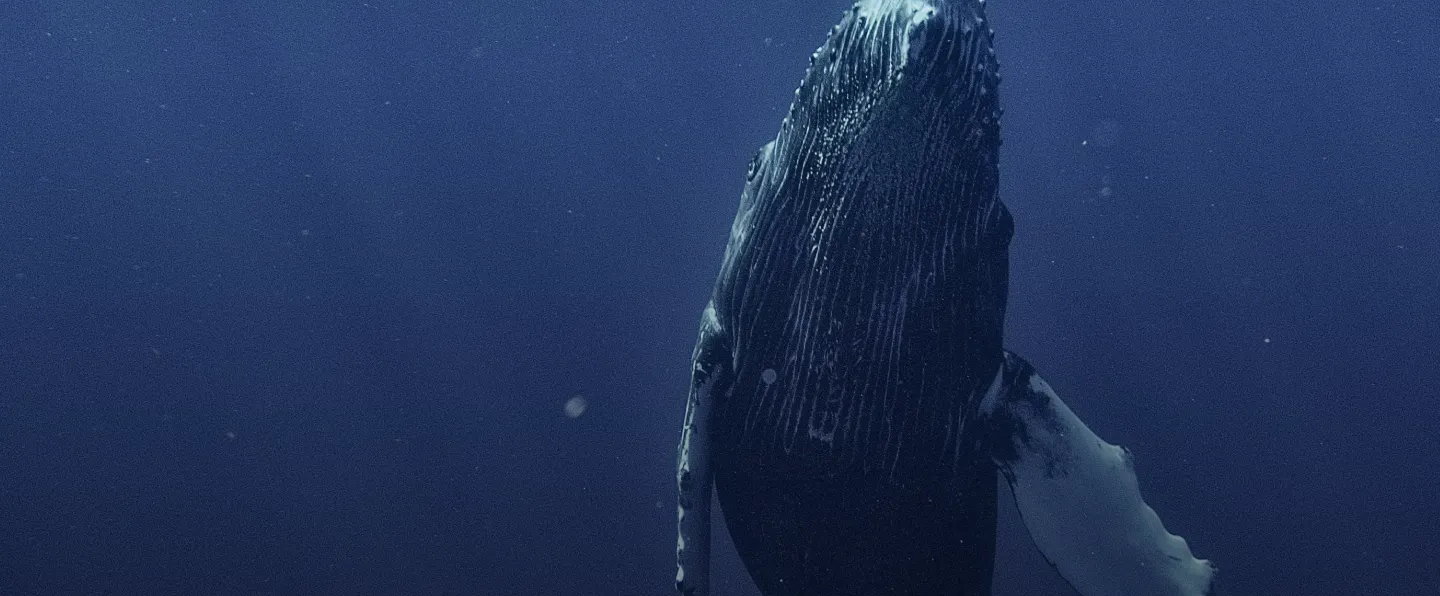
Deep-Seabed Mining
Advancing precautionary and rights-based approaches to extractive activities that threaten vital and largely unexplored deep-sea ecosystems.
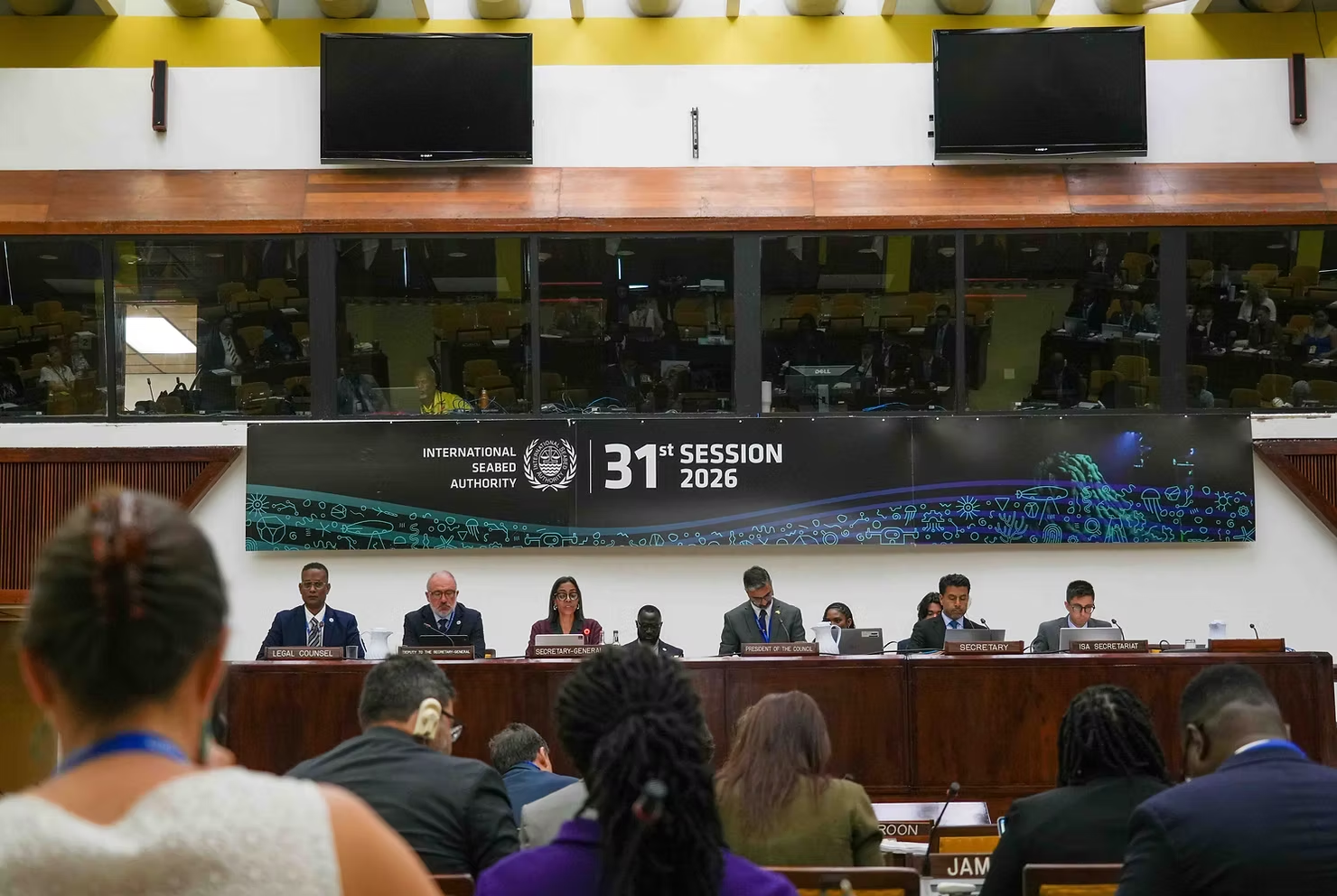
Deep-seabed mining is the proposed extraction of mineral resources from the deep Ocean floor. These activities would take place thousands of metres below the Ocean surface, in some of the planet’s least understood and most fragile ecosystems.
Why is deep-seabed mining an issue?
Deep-seabed mining involves the exploration and exploitation of mineral resources on the seabed, including polymetallic nodules, sulphide deposits and cobalt-rich crusts, which contain minerals such as cobalt, manganese, nickel and copper. The International Seabed Authority (ISA), established under the 1982 UN Convention on the Law of the Sea (UNCLOS), has the exclusive competence to regulate mineral-related activities in the seabed beyond national jurisdiction, known as “the Area”, and is responsible for protecting the marine environment from the harmful effects of deep-seabed mining. The Area and its resources are the common heritage of humankind, and mining activities in the Area must be carried out for the benefit of humankind as a whole. While exploration is ongoing, commercial exploitation in the Area has not yet commenced as the ISA is still negotiating its Mining Code. The deep sea remains one of the least understood places on Earth. Deep-seabed mining poses severe and potentially irreversible risks to deep-sea ecosystems and could disrupt the Ocean’s vital functions, including carbon storage. Allowing mining to proceed without adequate scientific understanding of its environmental impacts risks causing serious harm to the marine environment and undermining the Human Right to a Clean, Healthy and Sustainable Environment. Greenlighting deep-seabed mining in the face of such uncertainty could be a colossal mistake.
Removing polymetallic nodules eliminates the foundational substrate for unique deep-sea species, risking permanent extinction.
The seabed is one of the planet's largest carbon sinks; disturbing it risks releasing stored carbon.
Mining activities stir up massive clouds of fine particles that travel vast distances, smothering organisms and introducing toxic heavy metals into the water column.
Industrial machinery creates continuous noise and artificial light that disrupt the communication and navigation of marine mammals.
Deep- seabed mining could concentrate benefits among a few actors while its costs are borne globally, creating a new form of resource colonialism.
What we're doing
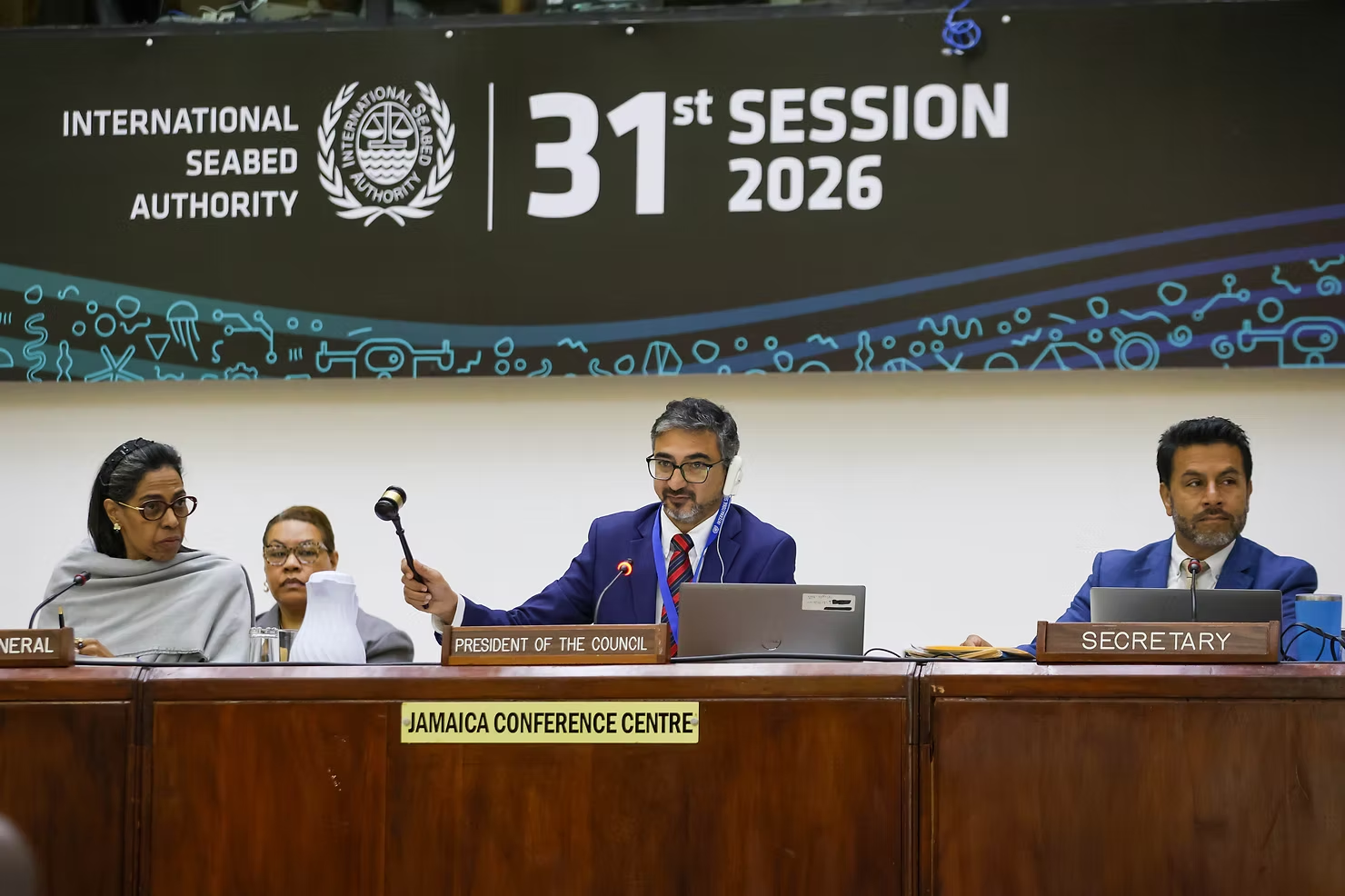
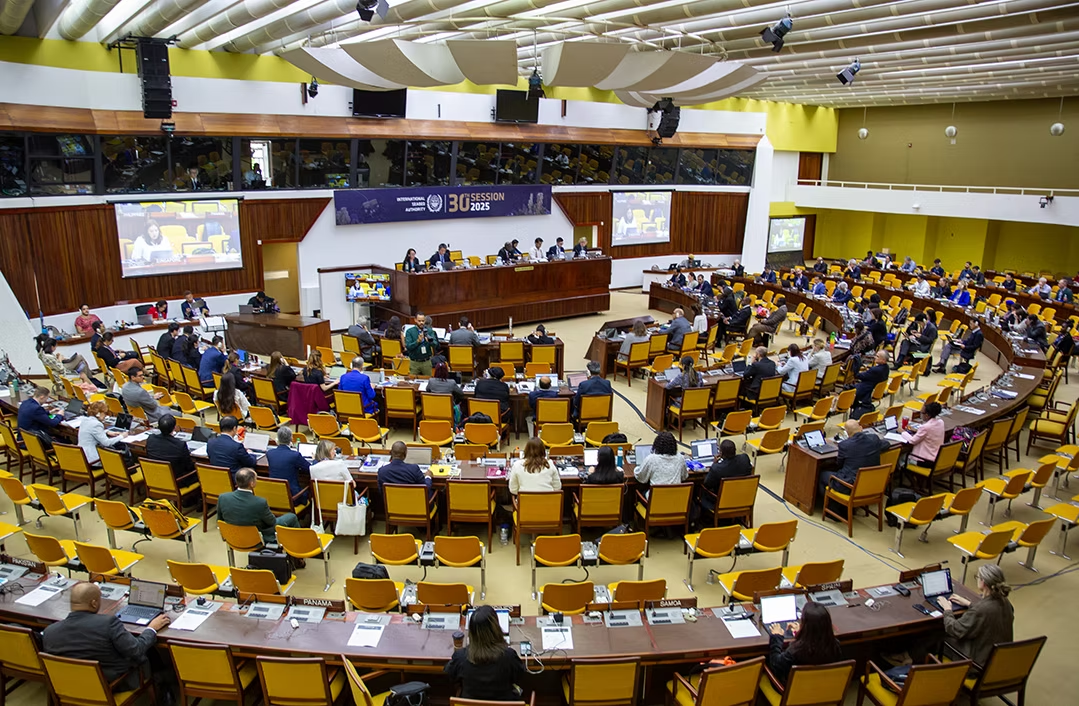
Our Legal Counsel and deep-seabed mining lead, Samantha Robb, closely monitors developments at the ISA and has attended its meetings in Jamaica in person since 2023 with ISA observer, the Deep Ocean Stewardship Initiative. She has authored legal papers examining States’ obligations under and gaps in the ISA’s governance regime, interactions between Ocean governance frameworks, and the interconnection between deep-seabed mining and Human Rights. Our deep-seabed mining work spans regulatory analysis, legal opinions, strategic advice, research and litigation strategy for States, civil society and Indigenous communities. This has included detailed analysis of and commentary on the development of the ISA’s Mining Code, comparative reviews of national deep-seabed mining legislation and advice on States’ obligations in relation to unilateral mining. We develop and assess potential litigation strategies to strengthen accountability and challenge conduct that threatens the marine environment. We also work on questions of effective Indigenous participation and rights within the ISA framework, benefit sharing and the common heritage of humankind, and the intersections between deep-seabed mining and Human Rights, especially the Human Right to a Clean, Healthy and Sustainable Environment. Our work combines specialist technical expertise in the international deep-seabed mining regime with our broader knowledge of Ocean governance, marine protection and Human Rights law to identify legal avenues for stronger environmental protection and accountability.
Related blogs
Support Our Work
The Ocean needs more than awareness. It needs accountability. Your support helps advance strategic legal action, achieve strengthen Ocean Rights and support Ocean-dependent and Indigenous communities working to protect the ecosystems they know best. Together, we can help turn legal obligation into lasting Ocean protection.