Energy Transition
What Are We Really Transitioning From?

Justice can fail twice: first in the way a decision is made, and again in the world that decision leaves behind.
I have been thinking about that distinction, justice as process and justice as outcome, as the world races towards a lower-carbon future.
As a process, justice asks who gets to decide what the transition will look like. Whose knowledge carries authority? Who controls the finance? Who is invited into the room only after the important choices have been made? Can communities establish boundaries that governments, investors and developers are required to respect?
As an outcome, justice asks who benefits and who bears the cost. Who receives the energy, jobs, infrastructure and profits? Who is left with damaged land, disrupted livelihoods and cultural loss? Are communities and ecosystems more secure when the transition is complete, or have the burdens simply been moved somewhere less visible?
These questions feel especially urgent in the Pacific, where the Ocean is not merely a resource. It is identity, genealogy, culture, spirituality and livelihood. It holds histories, connects families, provides food and work, and carries obligations between generations. It is not an empty space surrounding islands. It is home.
That understanding complicates the familiar language of a “just transition.” We often describe the transition as a shift between technologies: from fossil fuels to renewables, petrol vehicles to electric ones, and coal-fired power to wind and solar. Those changes are necessary and urgent. Pacific communities, already living with rising seas, damaged coastlines, stronger storms and warming waters, understand the cost of delay better than most.
But changing the technology may be the easier part. The harder transition is away from the extractive logic that has taught us to treat some peoples, places and ecosystems as expendable. Unless that logic also changes, a lower-carbon future may reproduce the very relationships of power that created the climate crisis.
We may change how the world is powered without changing who is expected to pay the price.
Extraction is more than an industry
Our economies are not merely dependent on extraction. They have been organised around it. We are (humanity is!) addicted to it.
For generations, wealth has been built by taking from particular lands and waters, often without the meaningful agreement of the people who belong to them. The benefits travel outward. The damage remains.
That history is written across the Pacific. Islands and communities have been treated as sources of phosphate, timber, fish and minerals; as sites for nuclear testing, military activity and waste; and as distant places whose losses can be accepted in pursuit of someone else’s security or development. The language used to justify this has changed over time. It has been called civilisation, progress, development and security. Today, there is a danger that the language of climate action could be used in the same way.
The energy transition will require minerals used in batteries, electricity networks, wind turbines and electric motors. The International Energy Agency reports rapidly growing demand for lithium, nickel, cobalt, graphite, copper and rare earth elements, driven substantially by electric vehicles, battery storage, renewable generation and expanded electricity grids. The IEA has also acknowledged that new mines and processing facilities can place increasing pressure on communities, Indigenous Peoples and the environment.
None of this is an argument against renewable energy. We need the energy transition, and we need it quickly. But urgency cannot mean that we stop asking where materials come from, who controls their extraction and who must live with the consequences. A battery is not inherently just because it belongs to a low-carbon economy. A wind turbine does not erase the conditions under which its minerals were obtained.
A world can burn less oil and still treat Pacific lands, waters and communities as sacrifice zones. It can reduce emissions while creating new arguments for why somebody else’s home must be mined. It can speak of saving the planet while continuing to divide the world into places that benefit and places that may be damaged.
If that happens, we will have changed the technology without changing the relationship.
The Ocean is not a warehouse
Deep-sea mining brings this tension into sharp focus. The language surrounding the deep Ocean often makes it sound like an unopened warehouse: remote, unused and valuable primarily for what can be removed from it.
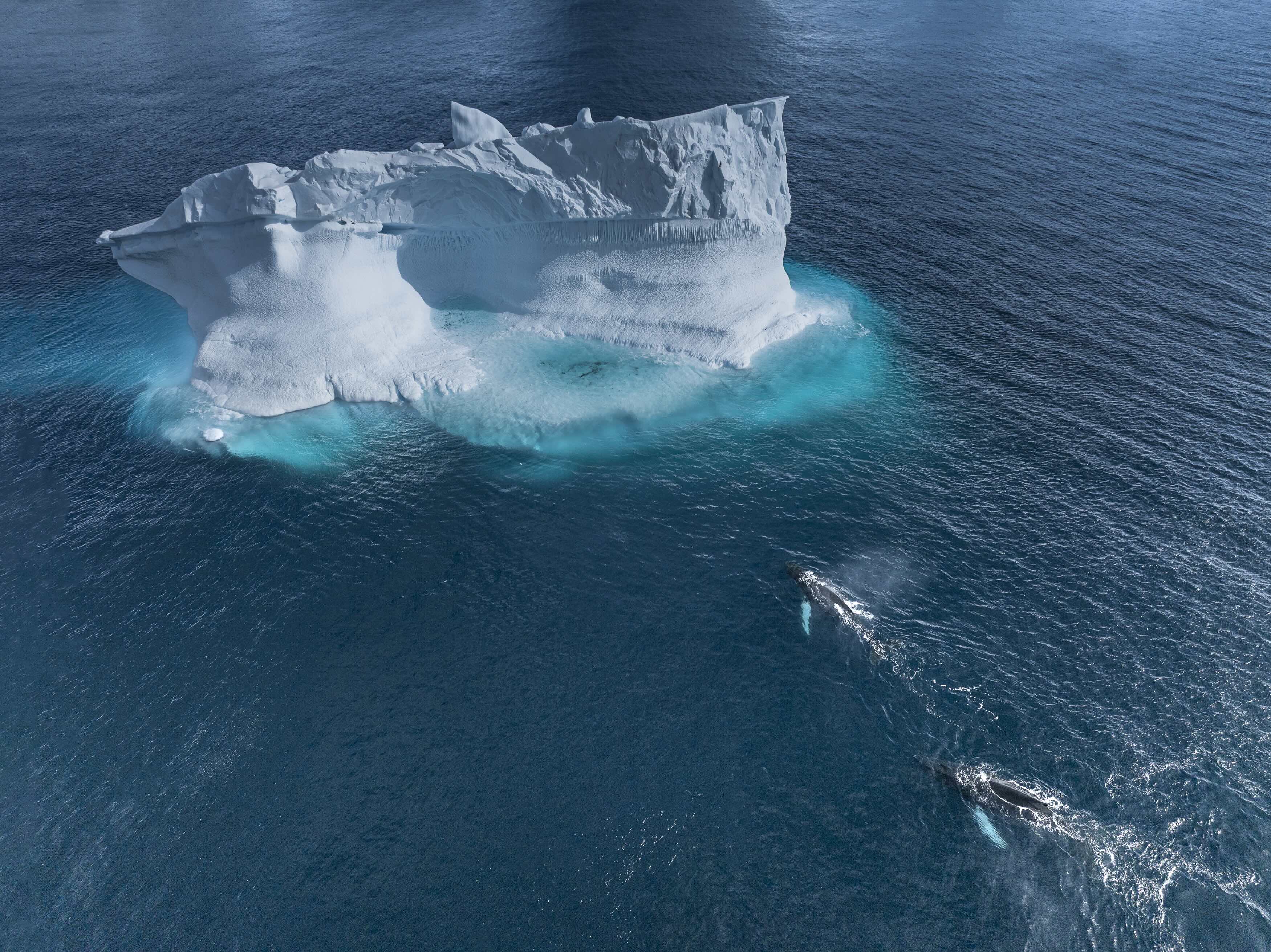
But the deep Ocean is part of a living system. It does not become expendable because much of it lies beyond our sight. Its distance from the centres of political and economic power does not make the risks less real.
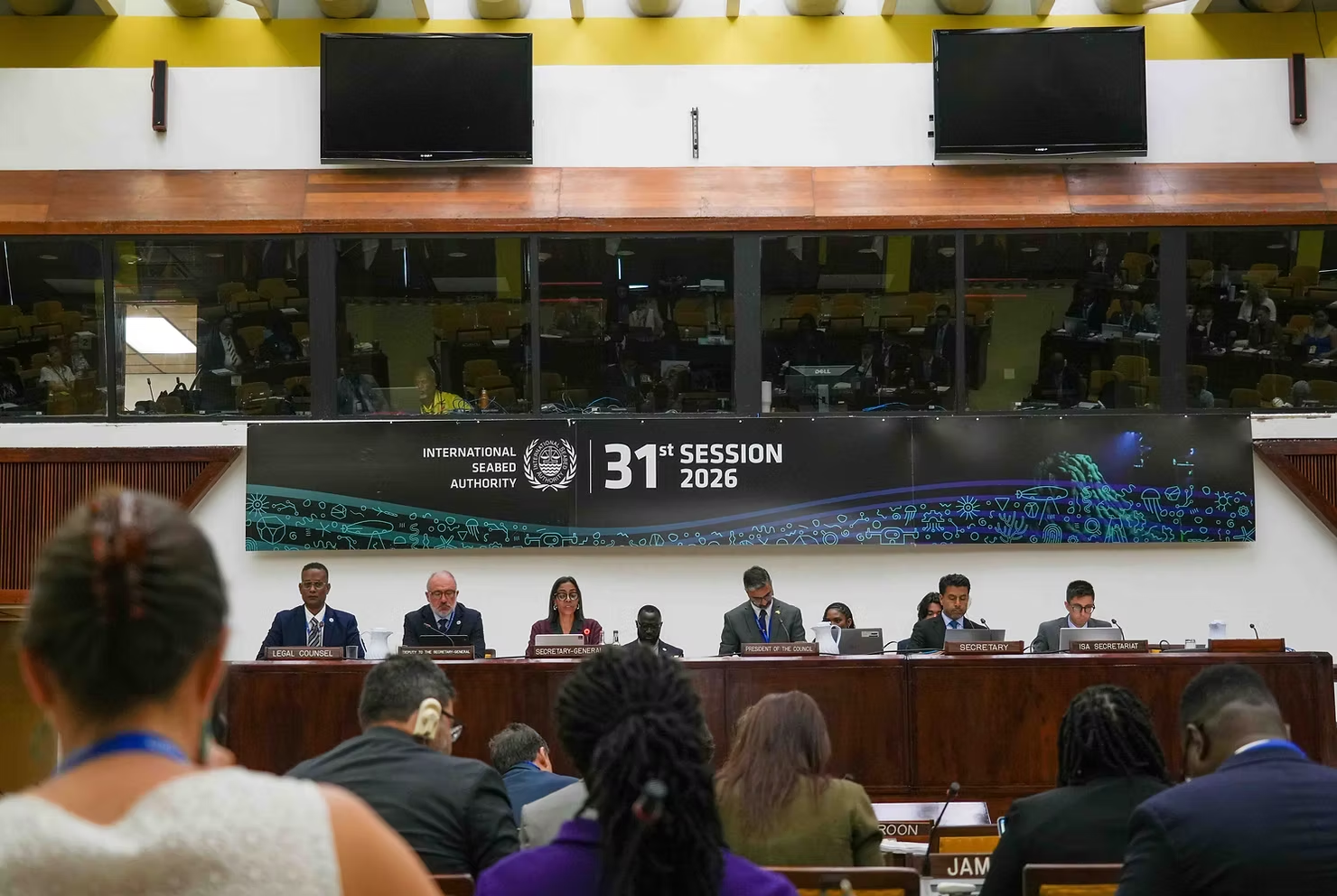
Under the United Nations Convention on the Law of the Sea, the seabed beyond national jurisdiction and its resources are the “common heritage of mankind.” The Convention requires measures to ensure effective protection of the marine environment from the harmful effects of seabed activities. As of September 2026, the International Seabed Authority had not adopted a final exploitation code or authorised commercial mining in the international seabed area. Its account of the 2026 negotiations confirms that important environmental, financial, regulatory and institutional questions remain unresolved.
The legal questions matter. What environmental standards should apply? How should cumulative effects be assessed? Who will monitor compliance? Who will be liable if something goes wrong? What would an effective remedy look like in an ecosystem that may take centuries, or longer, to recover?
But before asking how deep-sea mining should be regulated, there is a more fundamental question: Who is entitled to decide what the Ocean is for?
For people whose histories, spirituality and identities are inseparable from the Ocean, this is not simply a debate about managing mineral resources, but a question about whether one relationship with the Ocean will be respected or displaced by another, one based on extraction, ownership and sale.
Not every Pacific government or community holds the same position on deep-sea mining. Pacific perspectives should not be flattened into a single voice. But disagreement within the region does not justify decisions being made outside it. Nor does it remove the need to listen seriously to the people for whom damage to the Ocean would be social, cultural and spiritual, as well as environmental.
Beyond jobs
The idea of a just transition emerged largely from the labour movement. At its heart was a simple and important demand: workers and communities should not be abandoned as economies move away from polluting industries.
That demand remains essential. The International Labour Organization’s guidelines emphasise decent work, social protection and dialogue among governments, workers and employers.
The idea, however, cannot end at the workplace gate. The Paris Agreement places climate action alongside human rights, the rights of Indigenous Peoples, public participation, gender equality, food security, intergenerational equity and the integrity of ecosystems. It also provides that adaptation should be participatory and informed, where appropriate, by traditional and Indigenous knowledge.
At COP30, parties developed this understanding further. The 2025 decision on the Just Transition Work Programme recognises the importance of people-centred and bottom-up approaches, meaningful participation, human rights, climate resilience, Indigenous rights and free, prior and informed consent. These are not decorative principles. They go to the heart of what makes a transition just.
The United Nations Declaration on the Rights of Indigenous Peoples affirms the rights of Indigenous Peoples to participate in decisions affecting them and to determine priorities for the use and development of their lands and resources. It calls for states to consult and cooperate through Indigenous Peoples’ own representative institutions with the objective of obtaining free, prior and informed consent.
The legal character of these instruments differs. The Paris Agreement’s preamble does not operate in the same way as a binding substantive provision, and the Declaration is not itself a treaty. But together they reflect an increasingly clear expectation: climate action must be assessed not only by the carbon it removes, but also by the rights it respects, the relationships it creates and the harms it prevents.
That requires more than presenting communities with a finished project and asking how its effects should be managed. Participation must begin while choices are still open. Information must be available in forms people can understand and use. Communities need enough time and resources to assess proposals independently. Their knowledge must be capable of changing the decision.
Sometimes that requires better conditions. Sometimes it requires changing the project. And sometimes it requires accepting that the answer is no.
When process and outcome come apart
It is easy to call a process inclusive because a consultation was held, submissions were invited or community representatives were present. Presence is not power.
A community may be heard without being able to influence the result. Consultation may take place only after contracts have been signed and political commitments made. Technical reports may be publicly available but impossible for affected people to evaluate without independent expertise. A project may offer compensation while refusing to recognise that some losses cannot be priced.
Even a project that follows every formal step may leave one community with contaminated water while distant consumers receive cleaner transport. A renewable-energy development may contribute to national climate targets while displacing customary landholders. A climate-finance programme may build valuable infrastructure while leaving a vulnerable country with more debt.
A fair process cannot redeem an outcome that entrenches sacrifice. Nor can a promised benefit justify a process built on exclusion or coercion.
Consultation is not meaningful if it begins after the important decisions have been made. Benefit-sharing is not enough if communities cannot refuse the activity producing those benefits. Environmental assessment is not accountability if the project developer controls the evidence and defines the acceptable level of harm.
And finance is not fair if the countries that contributed least to climate change must borrow to survive its consequences.
Climate responsibility is a legal question
Pacific communities have long framed climate change as a matter of justice. Increasingly, international law recognises that it is also a matter of obligation and responsibility.
In 2024, the International Tribunal for the Law of the Sea concluded that human-caused greenhouse-gas emissions constitute pollution of the marine environment under the law of the sea. Its advisory opinion found that states must take necessary measures to prevent, reduce and control that pollution. Because of the danger of serious and irreversible harm, the Tribunal described the applicable standard of due diligence as stringent.
The following year, the International Court of Justice delivered its advisory opinion on states’ climate obligations. The Court affirmed that states have obligations under climate treaties and customary international law, including an obligation to exercise due diligence to prevent significant environmental harm. It also concluded that a failure to take appropriate action, including in relation to fossil-fuel production, consumption, exploration licences or subsidies, may constitute an internationally wrongful act.
These advisory opinions are not binding judgments between disputing states, but they are authoritative statements of international law. They matter because they reject the idea that climate action is simply an act of generosity by powerful states.
For the Pacific, that distinction is important because it demonstrates that Pacific communities are not asking for charity. They are asking states to take responsibility for harm, comply with their obligations and stop treating Pacific survival as negotiable.
Law cannot guarantee justice, but it can make it harder to disguise avoidable harm as an unfortunate side effect of progress.
The test for COP31
COP31 will be held in Antalya, Türkiye, from 9–20 November 2026. Australia will serve as President of Negotiations. Fiji and Tuvalu will host important preparatory and leaders’ meetings, while the official Australia-Pacific partnership identifies the 1.5°C goal, climate finance, the Ocean and Pacific leadership as central priorities.
There will be many references to Pacific voices. But being heard is not the same as having power.
Pacific leadership should not be measured by how many Pacific speakers appear on panels or how often the Blue Pacific is mentioned in speeches. It should be measured by whether Pacific priorities change the decisions that are ultimately made. It should also be measured by whether Pacific countries and communities help set the agenda rather than merely respond to it. Most importantly, Pacific leadership should be able to challenge the terms of the choice being offered.
The region should not have to choose between climate destruction and a new wave of extraction. It should not have to choose between protecting communities from rising seas and protecting their lands and waters from projects promoted in the name of addressing those rising seas.
True justice requires more imagination than that.
Changing the logic
I do not want this argument to be misunderstood as a reason to delay the energy transition.
Delay is already causing profound harm. For many Pacific communities, climate change is not a future scenario. It is entering homes, contaminating water, disrupting food systems and threatening places where ancestors are buried.
We must move faster. But we must also decide what we are moving towards, and who gets to decide.
A lower-carbon future is necessary. It will not be just if it is built through the same relationships that made people and places expendable. Replacing oil wells with mines while preserving dispossession, unequal decision-making and distant control would be a transition in infrastructure, not a transition in justice.
The Pacific contribution to COP31 may therefore be more fundamental than another list of regional priorities. It may be a challenge to the world’s understanding of climate action itself.
Can we build what comes next without asking the same communities to sacrifice again? Can we learn to see the natural environment, and one another, as more than resources to be used? As we move towards COP31, are we simply changing our energy systems, or are we finally prepared to change the logic behind them?
How we answer will reveal what we truly mean by justice: not only the process we follow, but the world that process leaves behind. It will show whether we are building a genuinely different future—or merely finding new ways to power the old one.
-
Naima Taafaki-Fifita
Senior Associate & Ocean Guardianship Lead, Ocean Vision Legal
Related Blog posts

Support Our Work
The Ocean needs more than awareness. It needs accountability. Your support helps advance strategic legal action, achieve strengthen Ocean Rights and support Ocean-dependent and Indigenous communities working to protect the ecosystems they know best. Together, we can help turn legal obligation into lasting Ocean protection.