Bottom Trawling
Bottom trawling is a fishing practice where large, weighted nets are dragged across the Ocean floor, destroying fragile marine habitats in its way.
In May 2026, NGOs ClientEarth, Blue Marine Foundation, Stichting Doggerland and Stichting ARK secured a landmark victory: the District Court of The Hague ruled that bottom trawling conducted by vessels flying the Dutch flag in the Dutch part of the Dogger Bank was unlawful. This is the first court ruling of its kind in Europe, and we have reasons to hope it will not be the last.
Bottom Trawling
Bottom trawling is one of the most destructive fishing practices that exists, yet it is still widely used across the entire Ocean. In January 2024, Ocean Vision Legal, representing BUND and Seas at Risk, was the first Ocean protection organisation initiating proceedings challenging the legality of bottom trawling in European marine protected areas (Natura 2000 sites).
Bottom trawling is, by nature, highly unselective. Trawlers destroy coral reefs and can accidentally catch bigger species such as sharks, dolphins, turtles and even seabirds. These animals are often discarded overboard, dying or dead.
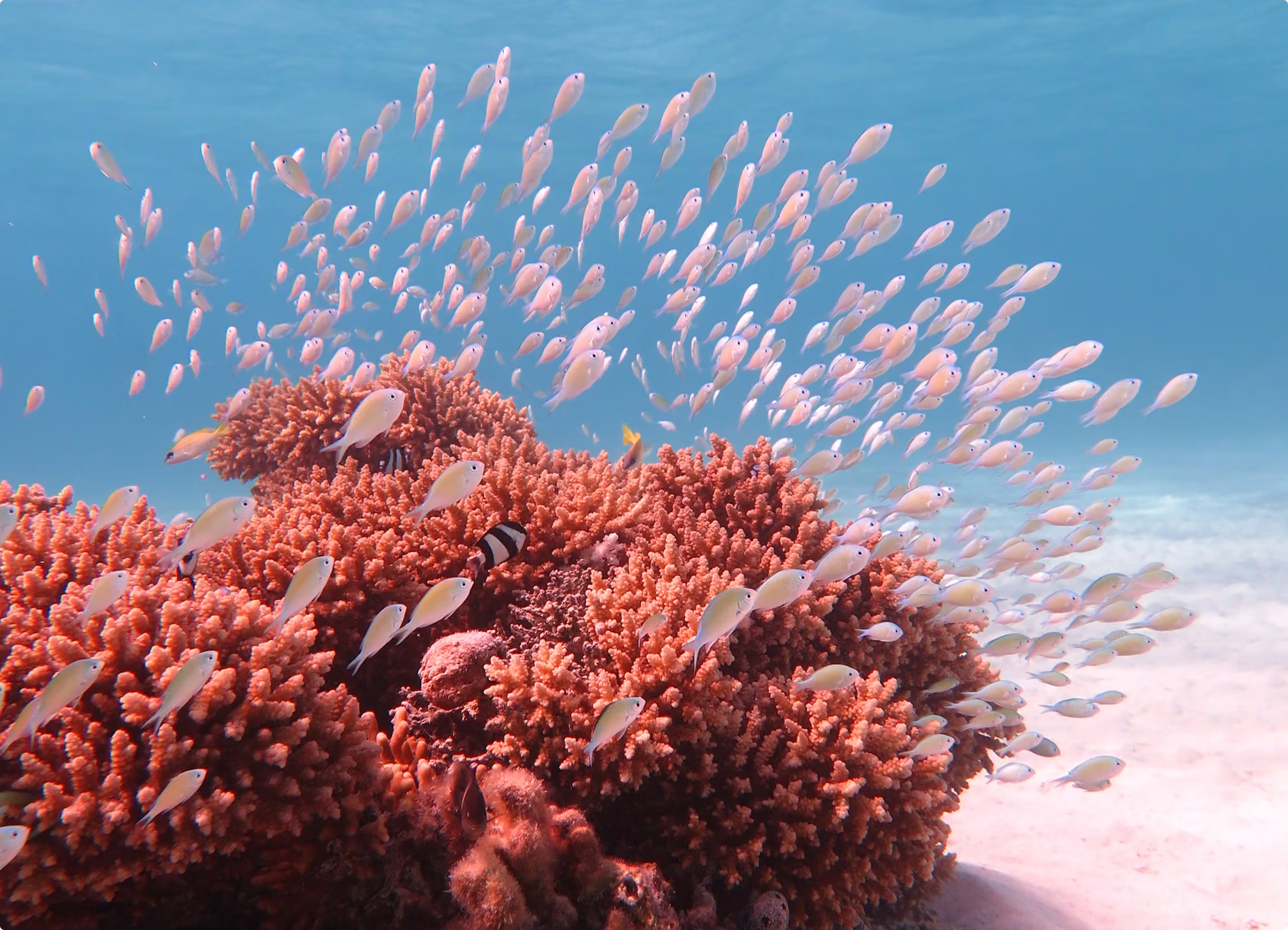
Coral reefs and seamounts are not just important in their own right, but also for the safe reproduction havens they create. Other creatures find a home within their shelters. Trawling nets destroy not only these vulnerable habitats, but also the marine life depending on them.
Bottom trawling erases vital hiding places and spawning grounds for juvenile fish, making it harder for fish to reproduce and for fish stocks to replenish.
The seabed acts as a giant carbon storage vault. Trawling turns around ancient sediment, releasing massive amounts of carbon dioxide (CO₂). Studies estimate that bottom trawling releases up to 370 million metric tons of CO₂ annually.
What we're doing
On behalf of German NGO BUND, we are suing the German Federal Office for Agriculture and Food for continuing to allow bottom trawling in the German part of the Dogger Bank - an MPA in the North Sea. Our case indicates that the current government practice of allowing bottom trawling in the Dogger Bank violates applicable law.
Support Our Work
The Ocean needs more than awareness. It needs accountability. Your support helps advance strategic legal action, achieve strengthen Ocean Rights and support Ocean-dependent and Indigenous communities working to protect the ecosystems they know best. Together, we can help turn legal obligation into lasting Ocean protection.